

Why Consumer Rights Matter at Every Stage
Most shoppers think about consumer rights only when something goes wrong. By then, valuable options - deadlines to file a chargeback, windows to return a defective item, or time limits to escalate a complaint - may already have closed. Understanding the full arc of consumer protection, from before you spend a dollar to after you've tried to return a product, gives you a meaningful advantage.
American consumers are protected by an overlapping framework of federal statutes, state laws, and regulatory agency rules. The Federal Trade Commission (FTC) enforces truth-in-advertising standards and rules on unfair or deceptive acts. The Consumer Financial Protection Bureau (CFPB) oversees payment protections. State attorneys general enforce additional consumer protection statutes that vary by jurisdiction. No single law covers everything - which is exactly why a complete overview matters.
~$8.8B
Consumer fraud losses reported in a recent year
According to FTC Consumer Sentinel Network data, reported fraud losses have grown significantly in recent years, with imposter scams and online shopping fraud among the leading categories.
60 days
Window to dispute a credit card charge
The Fair Credit Billing Act gives consumers 60 days from the statement date to formally dispute a billing error or unauthorized charge with their card issuer.
3 days
Cooling-off cancellation period for certain sales
The FTC's Cooling-Off Rule grants a three-business-day cancellation right for qualifying purchases of $25 or more made outside a seller's permanent business location.
Before You Buy: Disclosures, Contracts, and Pre-Sale Protections
Consumer protection starts before any money changes hands. Federal law prohibits deceptive advertising - claims must be truthful, substantiated, and not misleading. The FTC's guidelines cover everything from environmental claims on product labels to endorsements and testimonials online.
For major purchases, contracts play a central role. Before signing anything, you have the right to read and understand the full terms. See our pre-purchase checklist for a structured way to review contracts, cancellation terms, and warranty coverage before committing.
Certain categories carry additional pre-sale rules. Door-to-door sales and some telephone sales trigger the FTC's Cooling-Off Rule, which gives buyers three business days to cancel a purchase of $25 or more made at a location other than the seller's normal place of business. Real estate, insurance, and vehicle purchases are generally excluded but may have state-level equivalents.
Before signing any contract for a major purchase, ask the seller directly: 'What is the cancellation policy and is there a cooling-off period?' A legitimate seller will answer clearly; evasiveness is itself informative.
Many consumers don't know they can ask for - and are entitled to read - full contract terms before committing. Sellers are not permitted to misrepresent cancellation rights under FTC rules.
Screenshot the product listing page, including price and description, immediately before completing any online purchase. If a dispute arises later, this is often the most compelling evidence you have.
Product listings can be edited after a purchase is made. A timestamped screenshot preserves the exact representation you relied on, which is central to proving misrepresentation in a dispute.
At the Point of Sale: Pricing, Receipts, and Payment Protections
At the register - physical or digital - several protections apply. Most states have item pricing laws or scanner accuracy rules, meaning the price you're charged must match the advertised or shelf price. If a discrepancy occurs, many states require the retailer to honor the lower price and, in some cases, provide the item at no charge up to a statutory limit.
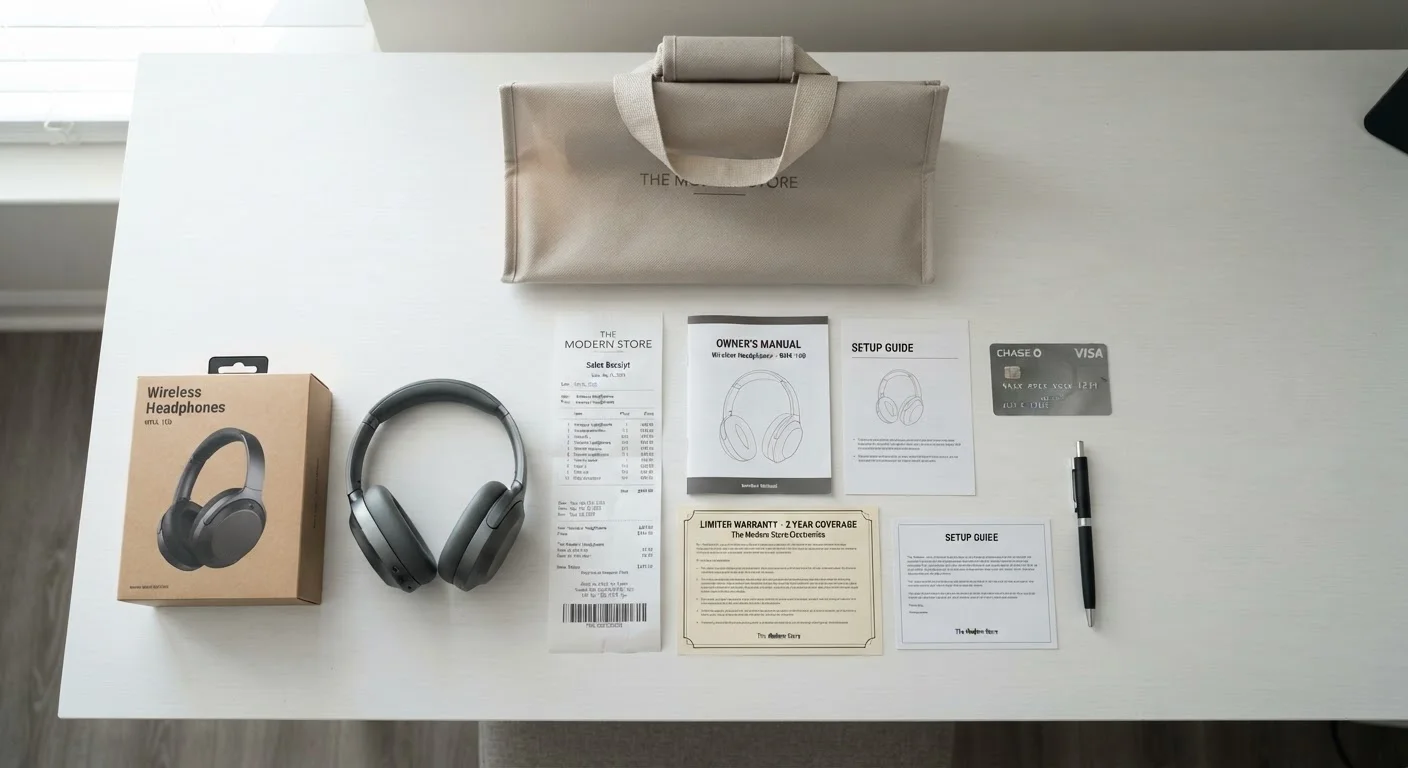
Receipts matter more than most shoppers realize. A receipt is your primary proof of purchase for warranty claims, dispute resolution, and tax purposes. For online purchases, save order confirmation emails and take screenshots of item descriptions and prices at checkout.
Payment method significantly affects your protections. Paying by credit card gives you access to chargeback rights under the Fair Credit Billing Act (FCBA). Debit cards carry more limited protections under the Electronic Fund Transfer Act (EFTA). Cash and gift cards offer the least recourse if a dispute arises. For significant purchases - particularly those made with unfamiliar sellers - credit cards provide a meaningful safety net.
Warranties: What's Promised and What's Enforceable
Warranties are legally binding promises about a product's condition or performance. Understanding what type of warranty applies - and what it actually covers - is essential before and after a purchase.
Express warranties are explicit promises made by a seller or manufacturer, either verbally or in writing. Under the Magnuson-Moss Warranty Act, any written warranty on a consumer product sold for more than $15 must clearly state whether it is a full or limited warranty, and must disclose its terms in plain language before sale.
Implied warranties are protections automatically created by state law, even when nothing is written. The most common is the implied warranty of merchantability - the legal assurance that a product will do what it's ordinarily used for. Sellers can only disclaim implied warranties in limited circumstances, and some states do not allow such disclaimers for consumer products at all.
For a detailed breakdown of warranty types and how to read the fine print, see our warranty explainer.
Returns, Refunds, and Your Statutory Rights
One of the most common misconceptions in consumer retail is that a store's posted return policy is your right. It is not. A return policy is a voluntary business practice that may be more generous than the law requires - or, in some cases, may fall short of what the law guarantees.
Under state consumer protection laws, you generally have the right to a refund or replacement when a product is defective, misdescribed, or fails to meet the implied warranty of merchantability - regardless of what the store's policy says. The store's policy governs change-of-mind returns; the law governs defective goods.
Understanding the distinction between store policy and statutory rights is one of the most practically useful things a consumer can know. Many shoppers accept an in-store credit or a restocking fee when a defective item legally entitles them to a full refund.
For online purchases, the FTC's Mail, Internet, or Telephone Order Merchandise Rule requires sellers to ship within the timeframe they advertise (or within 30 days if no timeline is stated), and to offer a full refund if they cannot. Unsolicited merchandise sent to you by a seller - a common dark-pattern tactic - can legally be kept as a free gift under federal law. See more in our guide to online shopping protections.
Disputing a Purchase: Chargebacks, Complaints, and Escalation
When direct resolution with a seller fails, you have structured escalation options. The most powerful for credit card holders is the chargeback - a formal dispute filed with your card issuer under the Fair Credit Billing Act. Valid grounds include items not received, items substantially different from their description, and unauthorized charges. You generally must file within 60 days of the statement on which the charge appears, so timing is critical.
Documentation is the cornerstone of any successful dispute. Keep purchase receipts, photos of defective products, records of all communications with the seller, and notes of phone calls (including dates and the names of representatives). Many valid consumer claims fail not on the merits but on missing documentation - a preventable outcome.
Beyond chargebacks, consumers can file complaints with the FTC at ReportFraud.ftc.gov, their state attorney general's office, or the CFPB for financial product issues. For vehicle-related disputes - particularly concerning dealer practices or lemon law claims - state-specific lemon law offices and the car buying resources in your state are relevant starting points. Owners seeking ongoing vehicle rights information may also find the car ownership hub useful.
This article provides general consumer information and education only. It is not legal advice. For guidance specific to your situation, consult a qualified attorney or contact your state attorney general's consumer protection office.
The content on this site is for informational purposes only and is not a substitute for professional advice. Always consult a qualified professional for guidance specific to your situation.