

Why Good Intentions Aren't Enough
Deciding to eat healthier is one of the most common wellness goals Americans set - and one of the most commonly abandoned. The problem usually isn't motivation. It's the gap between what people think constitutes a healthier diet and what the evidence actually supports. Misinformation is everywhere, and even well-meaning changes can backfire if they're based on flawed assumptions.
This isn't about blame. Most of these mistakes are completely understandable given how confusing nutrition messaging can be. If you've ever wondered why your healthy-eating efforts didn't seem to stick or pay off, the answer may lie in one of the patterns below. For a solid grounding in nutrition fundamentals, our beginner's nutrition guide is a good starting point.
Going 'all or nothing' and overhauling the entire diet at once.
Why it happens: People tend to equate the size of a change with its effectiveness. A dramatic reset feels like a serious commitment - but it's also overwhelming and unsustainable.
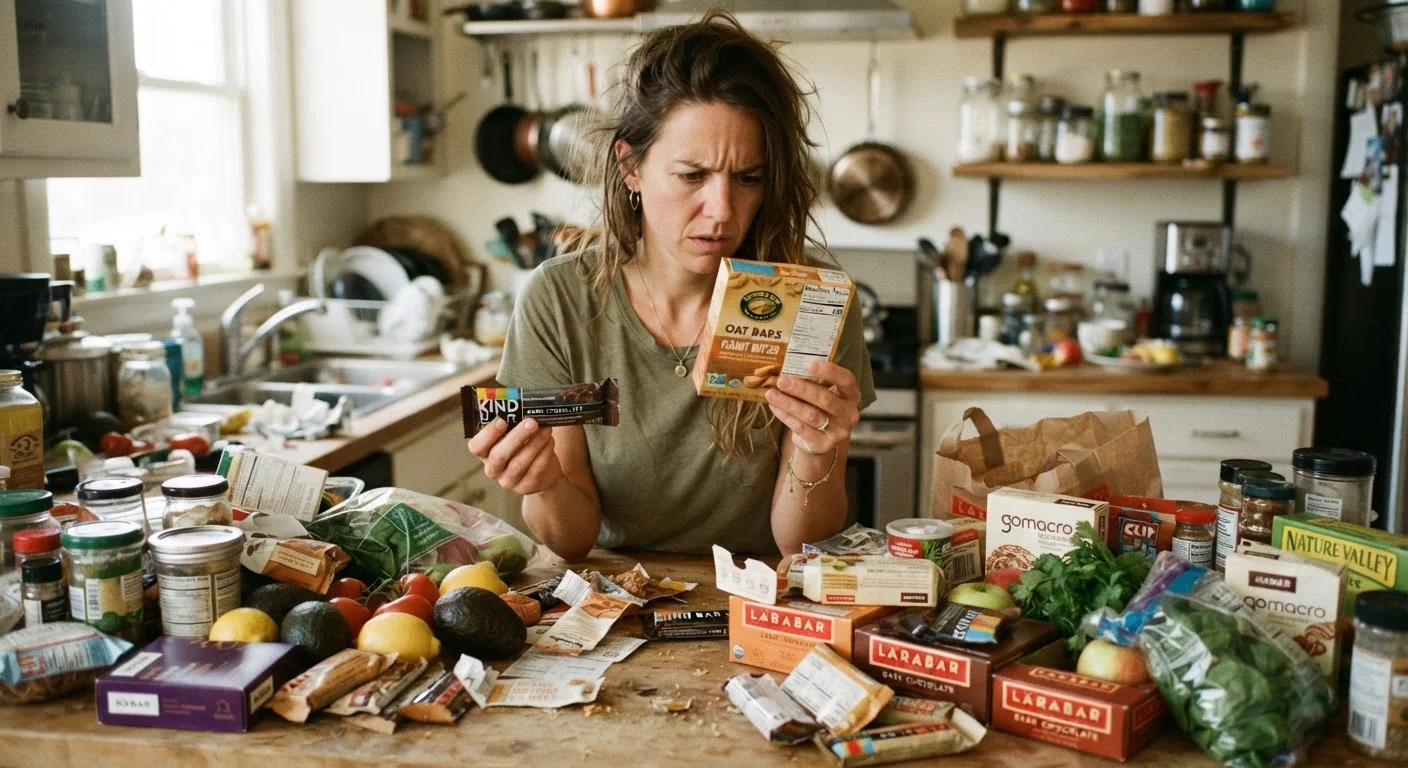
Trusting 'health halo' labels on packaged foods without reading the full nutrition facts.
Why it happens: Terms like 'natural,' 'organic,' 'low-fat,' or 'gluten-free' are marketing descriptors, not nutritional endorsements. They signal virtue without guaranteeing a healthier product.
Eliminating entire macronutrient groups - like all carbohydrates or all dietary fat.
Why it happens: Popular diet trends often villainize one macronutrient, making elimination feel logical and science-backed when it's frequently an oversimplification.
Ignoring liquid calories from juice, specialty coffee drinks, smoothies, and alcohol.
Why it happens: Beverages don't produce the same sense of fullness as solid food, so people often don't account for them when evaluating their overall intake.
Eating less overall rather than eating differently - and under-fueling as a result.
Why it happens: Restricting food intake feels intuitively healthy, but inadequate calorie intake can lead to fatigue, nutrient deficiencies, and rebound overeating.
Treating 'healthy eating' as a temporary project rather than a long-term lifestyle adjustment.
Why it happens: Diet culture often frames healthy eating as something you do for a set period - a cleanse, a challenge, a reset - rather than an ongoing practice.
The Bigger Picture: Patterns Matter More Than Individual Choices
One of the most freeing realizations in nutrition science is that no single meal makes or breaks a healthy diet. What matters is the overall pattern of eating across days and weeks. Fixating on whether one lunch was "clean enough" creates unnecessary stress and can actually undermine your relationship with food.
Restriction Can Backfire
Severely limiting food intake or cutting whole food groups without professional guidance can lead to nutrient deficiencies, disordered eating patterns, and metabolic changes that make long-term health harder to maintain. If your approach to eating is causing significant stress, guilt, or fear around food, consider speaking with a registered dietitian or mental health professional who specializes in eating behaviors.
Research consistently shows that dietary variety and long-term consistency outperform short-term dietary perfection. The fiber gap among Americans is a clear example - most people fall short not because of one bad choice, but because of persistent patterns that crowd out whole foods. Similarly, many nutrition myths thrive because they oversimplify complex dietary patterns into single-food villains or heroes.
It also helps to understand that nutrition science itself evolves. Guidance shifts as researchers gather better data, which is why staying grounded amid changing nutrition advice is a skill worth developing. The fundamentals - more whole foods, adequate vegetables, limited ultra-processed foods - have remained remarkably stable even as specific recommendations shift.
90%
Americans not meeting vegetable intake guidelines
According to CDC dietary data, approximately 90% of Americans do not consume the recommended daily amount of vegetables.
57%
Of U.S. calories from ultra-processed foods
Research published in BMJ Open found that ultra-processed foods account for more than half of total calorie intake among U.S. adults.
This article is for general informational and educational purposes only and is not a substitute for professional medical or dietary advice. Consult a qualified healthcare provider or registered dietitian before making significant changes to your diet.
The content on this site is for informational purposes only and is not a substitute for professional advice. Always consult a qualified professional for guidance specific to your situation.