

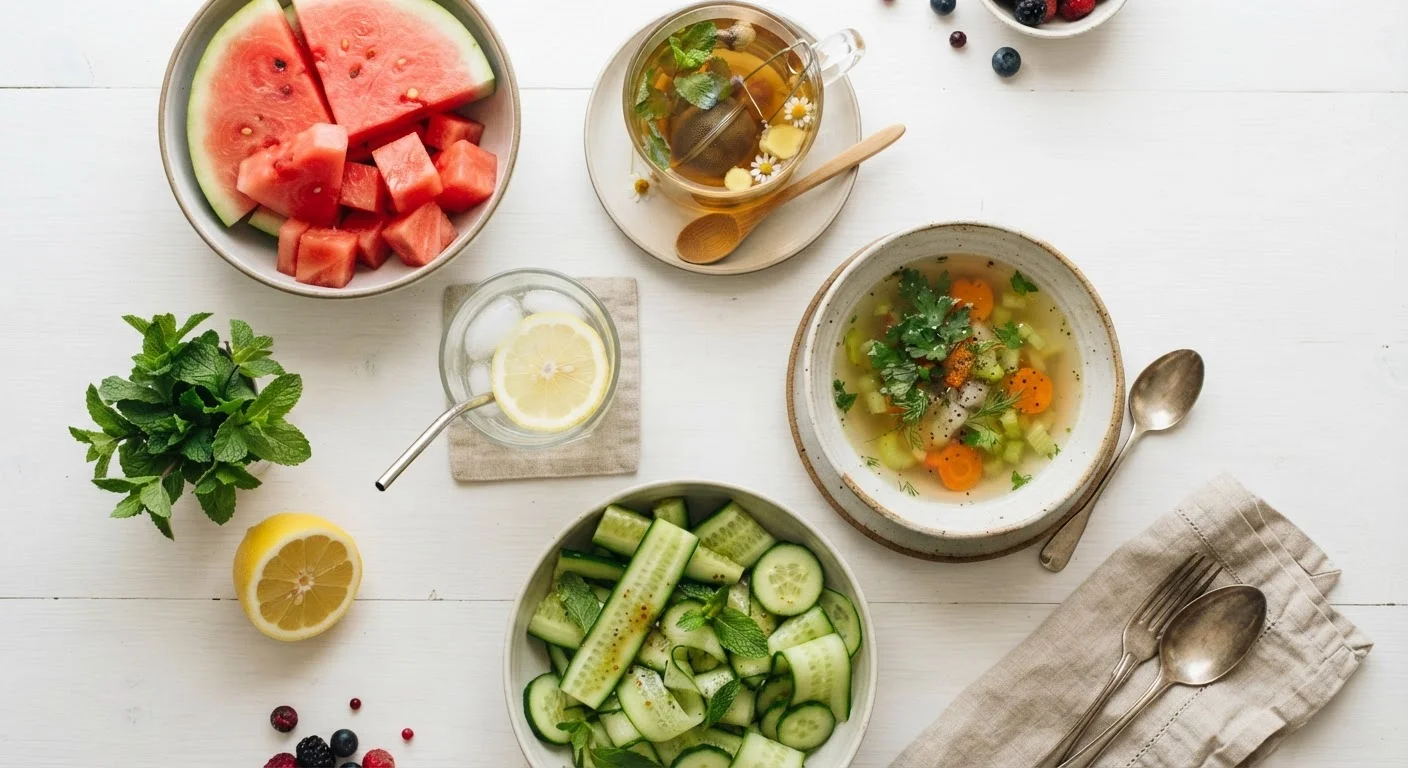
The Bigger Picture of Hydration
Most of us grew up hearing "drink eight glasses of water a day" - but the science of hydration is considerably more nuanced than that single rule suggests. Your body doesn't distinguish where fluid comes from; it simply needs enough to regulate temperature, transport nutrients, flush waste, and keep cells functioning. Every fluid-containing item you consume adds to that total.
The "8x8" guideline (eight 8-ounce glasses daily) is a rough approximation with limited scientific backing as a universal prescription. In reality, the right amount varies by body size, activity level, climate, diet, and health conditions. The good news: if you eat a varied diet rich in whole foods and drink beverages throughout the day, you may be closer to adequate hydration than you think.
~20%
Daily fluid from food, not drinks
The National Academies of Sciences, Engineering, and Medicine estimates that roughly 20% of daily water intake comes from solid food for the average adult.
96%
Water content in cucumber by weight
Cucumbers rank among the highest water-content foods available, making them one of the most efficient food-based hydration sources.
3.7 L
Daily fluid target for adult men
The National Academies sets an adequate intake of approximately 3.7 liters (125 fl oz) per day for men, and 2.7 liters (91 fl oz) for women, from all sources combined.
Which Beverages Count - Including Coffee and Tea
One of the most persistent hydration myths is that caffeinated drinks don't count - or worse, that they dehydrate you. Research published by the British Nutrition Foundation and supported by findings from institutions including the Mayo Clinic clarifies the picture: moderate caffeine intake does not cause net dehydration in regular consumers. The water in your morning coffee contributes positively to your fluid balance.
Here's a practical breakdown of common beverages and their hydration value:
- Water: The gold standard - zero additives, rapid absorption.
- Coffee and tea: Count toward fluid intake; mild diuretic effect is offset by water content at moderate intake levels.
- Milk: Highly effective for hydration due to electrolytes and carbohydrates that aid fluid retention.
- Herbal teas: Caffeine-free and fully hydrating.
- Fruit juice: Contributes fluid but also delivers concentrated sugar; not an optimal primary source.
- Broth and soup: Underrated hydration sources, especially during illness or cold weather.
“Urine color is probably the simplest, most practical hydration indicator available to most people. Pale yellow means you're likely well-hydrated; dark amber is a prompt to drink more.”
— Lawrence Armstrong, Professor of Kinesiology, University of Connecticut; researcher specializing in hydration science
Hydrating Foods You're Probably Already Eating
Solid food contributes approximately 20% of most adults' daily fluid intake, according to established dietary research. Certain foods are so water-dense that they function almost like a glass of water in nutritional terms.
High water-content foods include:
- Cucumber: ~96% water by weight
- Lettuce and celery: ~95% water
- Strawberries and watermelon: ~91-92% water
- Oranges and grapefruit: ~87-88% water
- Plain yogurt: ~85-88% water
- Cooked oatmeal: ~84% water (absorbs liquid during cooking)
A salad-heavy lunch or a fruit-forward breakfast isn't just nutritious - it's actively adding to your daily hydration total. Soups and stews are particularly effective because they combine the direct fluid of broth with the moisture content of vegetables and legumes.
A person eats a large salad with romaine lettuce, cucumber, and tomatoes for lunch alongside a bowl of chicken broth.
An office worker drinks two cups of black coffee in the morning and herbal tea in the afternoon, skipping plain water until evening.
A parent packs their child's lunch with watermelon slices, orange segments, and a small container of yogurt.
Recognizing Signs Your Intake May Be Insufficient
Many people are mildly under-hydrated without realizing it, partly because thirst is a late physiological signal rather than an early warning. By the time thirst registers, fluid levels are already somewhat depleted. Paying attention to a cluster of subtler signs is more reliable.
Common signs of insufficient hydration include:
- Urine that is dark yellow or amber (pale straw color is the target)
- Persistent fatigue or low energy not explained by sleep
- Frequent headaches, especially in the afternoon
- Difficulty concentrating or mental fogginess
- Dry mouth, lips, or skin
- Infrequent urination (fewer than four times daily)
Urine color remains one of the most accessible and reliable self-monitoring tools available. Aiming for pale yellow throughout the day gives a reasonable real-time signal of adequate hydration.
This article is for general informational and educational purposes only and is not a substitute for professional medical advice. If you have concerns about your hydration, kidney function, or specific health conditions, please consult a qualified healthcare provider.
Frequently Asked Questions
Yes, coffee does contribute to your daily fluid intake. While caffeine has a mild diuretic effect, research consistently shows that moderate coffee consumption - around three to four cups per day - does not cause net fluid loss. The water content in coffee more than offsets the minor diuretic action.
On average, food accounts for roughly 20% of daily fluid intake for most adults. High-water-content foods like cucumbers (96% water), strawberries (91% water), and soups can meaningfully increase this proportion depending on your diet.
Early signs include dark yellow or amber urine, thirst, mild fatigue, headache, and reduced concentration. Thirst itself is a late signal - by the time you feel thirsty, your body is already mildly dehydrated. Monitoring urine color is a practical day-to-day indicator.
Yes, carbonated water hydrates just as effectively as still water. The carbonation does not interfere with fluid absorption. Plain sparkling water - without added sodium or sugar - is a reasonable substitute for those who find flat water unappealing.
Sugary beverages like soda and fruit juice do contain water and contribute to fluid intake. However, high sugar content can slow gastric emptying and may have other health trade-offs, so they are generally not considered ideal primary hydration sources.
Yes, significantly. Sweat increases fluid loss, so physical activity and heat exposure raise your hydration requirements. Athletes or people working in hot environments may need substantially more fluid than standard guidelines suggest. Consulting a healthcare provider can help determine personal needs.
The content on this site is for informational purposes only and is not a substitute for professional advice. Always consult a qualified professional for guidance specific to your situation.