

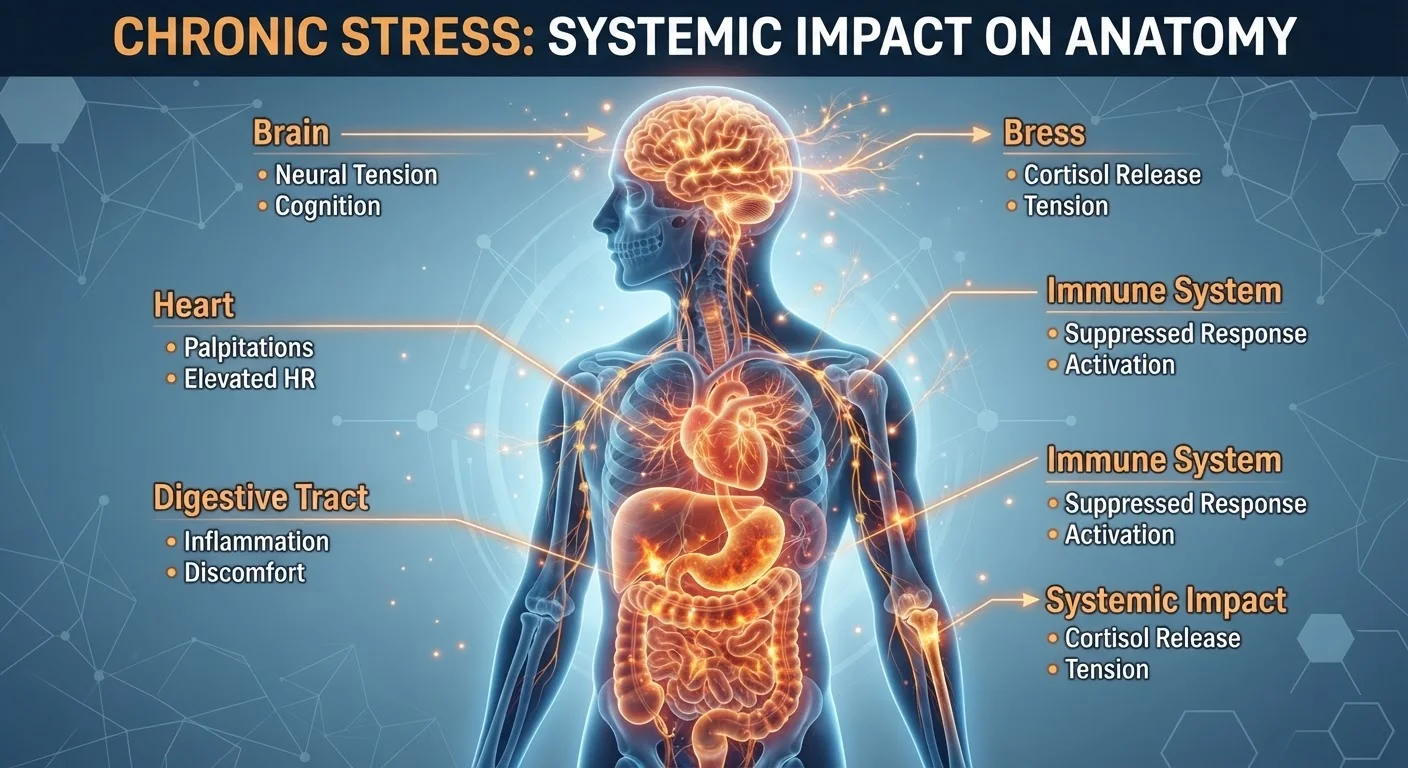
The Biology Behind the Stress Response
When the brain perceives a threat - whether it's a charging animal or a looming deadline - it triggers a cascade of hormonal signals. The adrenal glands release cortisol and adrenaline, heart rate climbs, muscles tighten, and digestion slows. This is the fight-or-flight response, and in short bursts, it's remarkably effective at keeping us safe.
The problem arises when the threat never fully resolves. Modern stressors - financial pressure, caregiving demands, job insecurity, social conflict - are often chronic and diffuse. The brain keeps sounding the alarm even when there's no immediate physical danger. Over time, the body pays a real biological price for staying in that heightened state.
This is part of a broader picture described in the full picture of mental wellbeing, where stress doesn't exist in isolation - it interacts with sleep, emotion regulation, and social connection in ways that compound over time.
77%
Adults who report physical symptoms of stress
According to survey data from the American Psychological Association, a large majority of U.S. adults regularly experience physical symptoms they link to stress.
2-3×
Increased cardiovascular risk linked to chronic stress
Research reviews have found that individuals with chronic high stress show substantially elevated rates of cardiovascular events compared to low-stress counterparts.
40%
Reduction in immune cell activity under chronic stress
Studies cited by the NIH indicate that prolonged psychological stress can significantly blunt natural killer cell activity, a key indicator of immune resilience.
What Happens to the Cardiovascular System
The heart and blood vessels are particularly vulnerable to chronic stress. Sustained elevations in cortisol and adrenaline keep blood pressure higher than baseline, forcing the heart to work harder over extended periods. The American Heart Association has identified stress as a contributing factor to hypertension and cardiovascular disease risk.
Chronic stress also promotes inflammation in arterial walls and may encourage behaviors - poor diet, disrupted sleep, reduced physical activity - that further burden the heart. It's a compounding effect: the direct physiological impact is layered on top of the lifestyle changes stress tends to produce.
A working parent manages a high-pressure job while caring for a sick family member. Over several months, they develop persistent headaches, begin catching every cold that circulates at the office, and notice their blood pressure has crept up at annual checkups.
A college student under sustained academic and financial pressure notices recurring stomach pain and irregular digestion throughout the semester, symptoms that ease significantly during semester breaks.
An individual going through a prolonged divorce finds that minor cuts and skin irritations take noticeably longer to heal than they used to, and that they seem to catch respiratory infections more frequently.
How the Immune and Digestive Systems Are Affected
Cortisol serves as a natural anti-inflammatory in short bursts, but sustained high levels actually suppress immune function. Research published through the National Institutes of Health (NIH) has shown that chronically stressed individuals exhibit reduced activity of natural killer cells - a key component of immune defense - and slower recovery from illness and injury.
The gut is equally sensitive. The enteric nervous system - sometimes called the "second brain" - is in constant communication with the brain via the vagus nerve. Chronic stress disrupts this gut-brain axis, contributing to symptoms like irritable bowel syndrome (IBS), acid reflux, bloating, and changes in appetite. Some researchers estimate that stress is a significant trigger for IBS flare-ups, though individual responses vary widely.
It's also worth noting that the body's relationship with stress isn't purely internal. Environmental factors matter too - even something as seemingly minor as a cluttered, disorganized living space can act as a low-grade stressor. The psychology behind why clutter feels overwhelming explores exactly how disorganized environments keep the nervous system in a low-level state of alert.
Recognizing the Signs - and What to Do Next
Chronic stress rarely announces itself clearly. It tends to accumulate gradually, making it easy to normalize symptoms like persistent fatigue, frequent colds, digestive discomfort, or tension headaches. Many people carry significant physiological stress loads without labeling it as stress at all.
Awareness is a meaningful starting point. If you notice a cluster of physical symptoms without a clear cause, or if stress feels constant rather than situational, it may be worth reflecting on whether the body is carrying more than it can sustainably manage. Signs that stress has crossed into something that deserves attention offers useful guidance on patterns worth discussing with a professional.
There is also growing evidence that regular physical activity can help moderate the physiological stress response. Research on exercise and mental health provides a grounded look at what movement can and cannot offer in this context.
This article is for general informational purposes only and is not a substitute for professional medical advice, diagnosis, or treatment. If you are experiencing significant or persistent symptoms, please consult a qualified healthcare provider.
Frequently Asked Questions
Yes. Research consistently links chronic stress to increased risk of cardiovascular disease, weakened immune function, gastrointestinal problems, and metabolic changes. These aren't just side effects - they reflect real, measurable physiological disruption. The body's stress response systems were not designed to stay activated indefinitely.
Everyday or acute stress is short-term - it comes and goes and typically resolves without lasting harm. Chronic stress persists over long periods, keeping the body in a near-constant state of biological alertness. This ongoing activation is what drives cumulative damage to organ systems.
Common physical signs include persistent headaches, muscle tension, fatigue, digestive upset, frequent illness, and disrupted sleep. Some people also notice changes in appetite, skin conditions like eczema flares, or elevated blood pressure. These symptoms often build gradually, making them easy to overlook or attribute to other causes.
Evidence strongly suggests it can. Sustained elevated cortisol suppresses immune cell production and blunts inflammatory response over time. Studies have found that chronically stressed individuals show slower wound healing and higher susceptibility to common infections like colds.
If stress is interfering with your sleep, relationships, work, or physical health on a regular basis, it's worth discussing with a healthcare provider. A doctor can help rule out other conditions, assess cardiovascular or immune indicators, and connect you with appropriate mental health resources. Never delay care if symptoms are severe or sudden.
The content on this site is for informational purposes only and is not a substitute for professional advice. Always consult a qualified professional for guidance specific to your situation.