

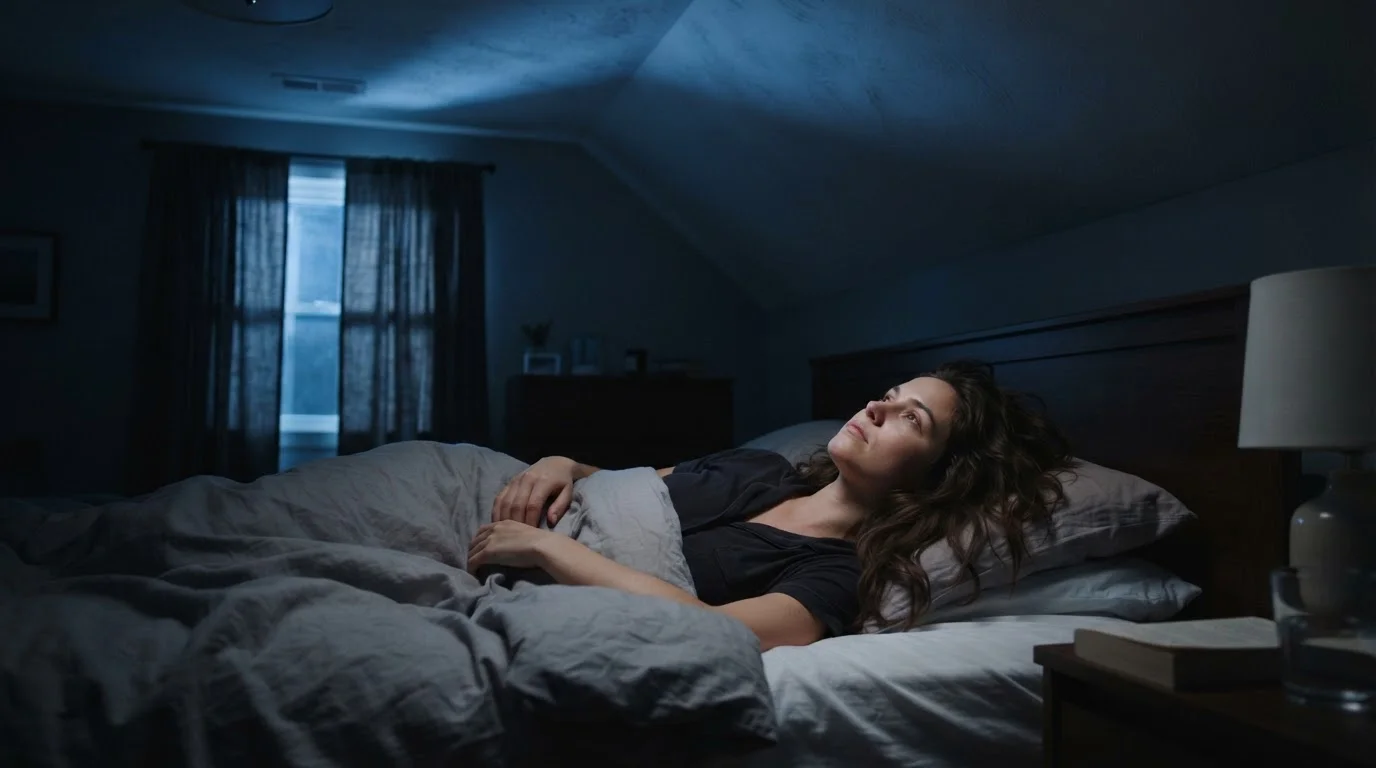
The Two-Way Street Most People Don't Recognize
Most people understand intuitively that being anxious or depressed can make sleep difficult. What's less appreciated is that the reverse is equally true: disrupted sleep actively contributes to the development and worsening of mental health conditions. This bidirectional relationship is now well-established in the scientific literature, and it reframes how researchers and clinicians think about both problems.
For decades, sleep disturbance was treated primarily as a symptom of mental illness - something that would resolve once the underlying condition was treated. That view has shifted considerably. Large epidemiological studies have found that people with insomnia are significantly more likely to develop depression and anxiety disorders over time, even when controlling for other risk factors. Sleep disruption, in other words, isn't just a downstream consequence - it's part of the machinery.
This matters practically. If the relationship only ran one way, treating the mental health condition would reliably fix the sleep problem. But clinicians frequently observe that sleep difficulties often persist even after other symptoms improve - and that addressing sleep problems directly can, in many cases, accelerate mental health recovery. The full picture is genuinely bidirectional.
Sleep Disorders Are Not the Same as Poor Sleep Habits
Conditions like insomnia disorder, sleep apnea, and restless leg syndrome are distinct clinical diagnoses with specific physiological underpinnings - they're not simply the result of bad habits or weak willpower. If sleep problems are persistent, significantly disruptive, or accompanied by symptoms like loud snoring, gasping, or uncontrollable leg movements, a medical evaluation is warranted rather than self-directed behavioral changes alone.
What Happens in the Brain During Sleep
Understanding why this connection exists requires a brief look at what sleep actually does for the brain. Sleep is not passive downtime. During various sleep stages - particularly REM (rapid eye movement) sleep - the brain actively processes emotional experiences, consolidates memories, and recalibrates the systems that regulate mood and stress response.
Research from sleep neuroscience suggests that REM sleep plays a particularly important role in emotional memory processing. During REM, the brain replays emotionally significant experiences in a neurochemical environment lower in norepinephrine (a stress-related chemical), which may allow memories to be consolidated without carrying the same emotional charge they had when first encoded. This has led some researchers to describe healthy sleep as a form of overnight emotional therapy.
When sleep is chronically disrupted - through insomnia, sleep apnea, or other causes - this processing is interrupted. Emotional reactivity increases, stress regulation weakens, and the brain's threat-detection systems become more sensitive. These are precisely the conditions that sustain anxiety and depression. For a broader look at how sleep fits into mental wellbeing, see our comprehensive mental wellbeing resource.
~10x
Higher risk of depression with insomnia
Research published in peer-reviewed literature has found that people with chronic insomnia are approximately ten times more likely to develop clinical depression than those who sleep well.
17%
U.S. adults with insomnia disorder
Estimates from epidemiological research suggest roughly 10-17% of U.S. adults experience insomnia disorder at any given time, making it one of the most common sleep complaints.
75-90%
People with depression reporting sleep problems
Studies consistently show that the vast majority of people diagnosed with depression also report significant sleep disturbances, reinforcing the deep overlap between the two conditions.
How Mental Health Conditions Disrupt Sleep
The reverse pathway is equally well-documented. Depression, anxiety, PTSD, and other mental health conditions alter sleep in measurable, physiological ways - not just through distressing thoughts that keep someone awake.
Depression, for instance, is associated with changes in sleep architecture: the natural progression through sleep stages becomes disrupted. People with depression often enter REM sleep earlier in the night and spend more time in it, while slow-wave deep sleep - the most physically restorative stage - is reduced. This leaves people feeling unrefreshed despite hours spent in bed.
Anxiety disorders tend to delay sleep onset. The stress response system - the hypothalamic-pituitary-adrenal (HPA) axis - is chronically activated in many anxiety conditions, keeping cortisol and arousal levels elevated at times when they should be declining. Racing thoughts and hypervigilance are behavioral manifestations of this physiological state. Understanding the full scope of anxiety's effects is important; common misconceptions about the disorder are addressed in our article on what people get wrong about anxiety disorders.
Breaking the Cycle: What the Evidence Supports
Because the relationship is bidirectional, there are multiple potential entry points for intervention - and research suggests that targeting sleep directly can produce meaningful mental health benefits.
Cognitive Behavioral Therapy for Insomnia (CBT-I) is the most rigorously studied behavioral approach to sleep problems. It addresses the thought patterns and behaviors that maintain insomnia - such as spending excessive time in bed, using the bedroom for non-sleep activities, and catastrophizing about sleeplessness. Clinical trials have found that CBT-I reduces not only insomnia severity but also symptoms of depression and anxiety in many participants.
Sleep hygiene - consistent sleep schedules, reduced caffeine and alcohol, limiting screen exposure before bed - is frequently discussed but often misunderstood as a simple checklist. Its effects are modest on their own and vary considerably by individual. For those interested in building more sustainable habits, evidence-informed guidance is available in our article on building a wind-down routine for better sleep.
Physical activity is another area where evidence is encouraging, though not conclusive. Regular movement is associated with improved sleep quality and reduced symptoms of depression and anxiety. The relationship between exercise and mental health is explored in depth separately.
If You're Stuck in the Cycle, Start Small
When both sleep and mood are struggling, it can feel impossible to know where to begin. Many clinicians suggest starting with one consistent behavioral anchor - such as a fixed wake time - rather than overhauling everything at once. Consistency in wake time helps stabilize the circadian rhythm, which supports both sleep quality and mood regulation over time. Discuss specific strategies with a healthcare provider who can tailor recommendations to your situation.
This article provides general health information for educational purposes and is not a substitute for professional medical advice. If you are experiencing persistent sleep difficulties or mental health concerns, please consult a qualified healthcare provider.
Frequently Asked Questions
Research suggests chronic sleep deprivation significantly increases the risk of developing depression and anxiety disorders, though it doesn't guarantee it. Sleep disruption affects mood-regulating brain circuits and stress hormone levels in ways that make people more vulnerable to these conditions. It's a risk factor, not a guarantee.
Depression commonly alters sleep architecture - the pattern of sleep stages the brain cycles through. People with depression may experience early-morning waking, disrupted REM sleep, or, in some cases, sleeping too much. These changes are thought to reflect underlying shifts in brain chemistry and circadian rhythm regulation.
Evidence suggests it can. Studies have found that treating insomnia with cognitive behavioral therapy (CBT-I) can reduce anxiety and depressive symptoms even when those symptoms aren't the primary treatment target. However, results vary and treating sleep in isolation isn't always sufficient for serious mental health conditions.
Anxiety activates the body's stress response system, which is designed to keep you alert to perceived threats. Elevated cortisol and adrenaline suppress the biological cues that promote sleep onset. Rumination - the cycle of repetitive worried thinking - keeps the brain in a state of arousal that is incompatible with falling asleep.
CBT-I (Cognitive Behavioral Therapy for Insomnia) is a structured, evidence-based approach that targets the thoughts and behaviors perpetuating poor sleep. Multiple clinical guidelines, including those from the American College of Physicians, recommend it as a first-line treatment for chronic insomnia. It is generally considered more effective long-term than sleep medications for many people.
Yes. If sleep difficulties are persistent, significantly affecting daily functioning, or occurring alongside mood changes, professional evaluation is important. A primary care physician, psychologist, or psychiatrist can assess whether an underlying condition is present and recommend appropriate treatment options tailored to your situation.
The content on this site is for informational purposes only and is not a substitute for professional advice. Always consult a qualified professional for guidance specific to your situation.