

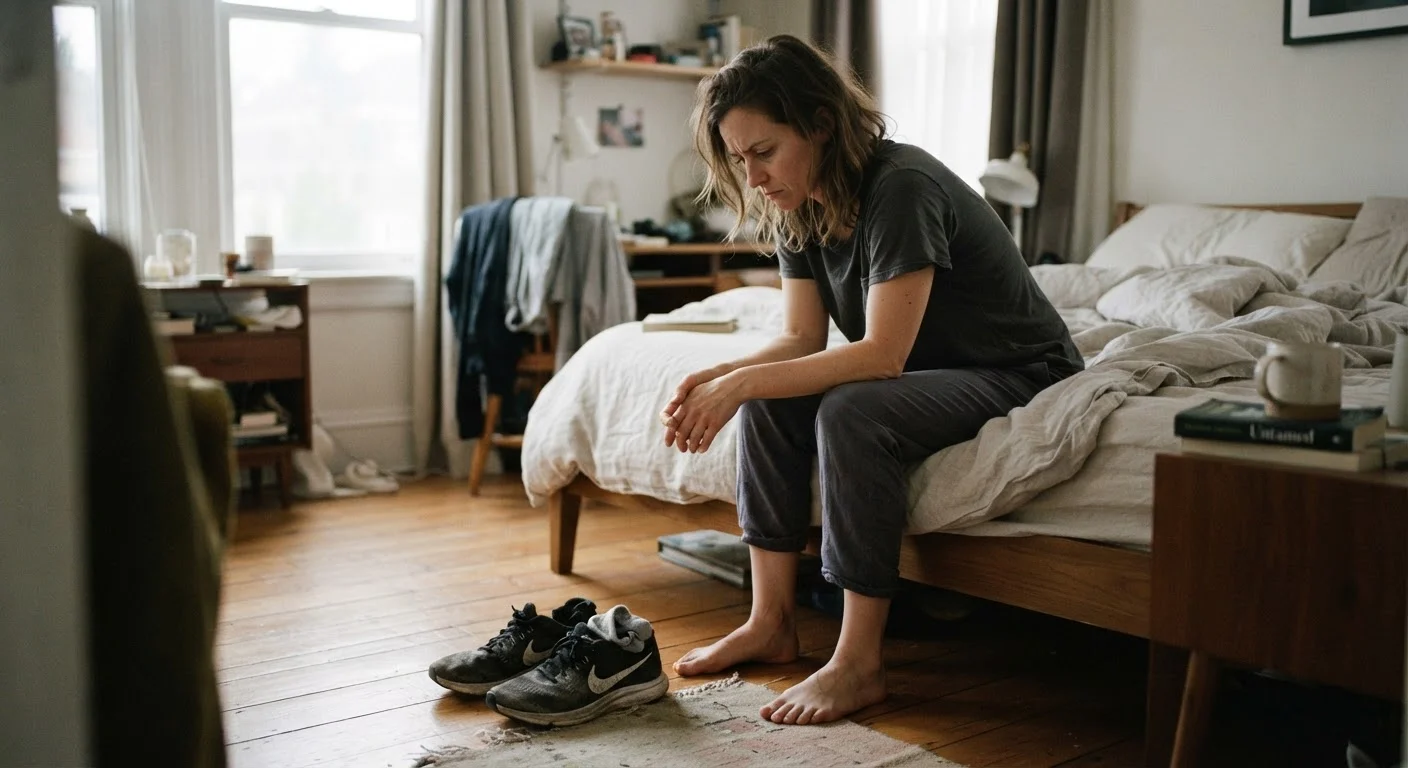
Why Exercise Feels Out of Reach for So Many People
Nearly half of American adults don't meet the physical activity guidelines recommended by the Centers for Disease Control and Prevention (CDC). Yet this isn't primarily a story about people who don't care about their health. Most people understand that movement matters. The gap between knowing and doing is where barriers live.
Barriers to physical activity are the conditions - practical, physical, emotional, and environmental - that make regular movement genuinely difficult. They exist on a spectrum from "I don't have time today" to "my neighborhood has no safe place to walk" to "my joints hurt too much to try." Each of these represents a real constraint, not a personal failing.
Understanding what type of barrier is operating in your own life is more useful than generic advice to "just move more." As research in public health consistently shows, the reasons people don't exercise are varied, intersecting, and often structural. Dropout rates in fitness programs are high, and the causes reveal more about human psychology and circumstance than about individual effort.
The Most Common Barriers - and What They Actually Mean
Time is the barrier cited most often in surveys, and it's worth taking seriously rather than dismissing. Many adults are managing jobs, caregiving, and household responsibilities simultaneously. When energy is finite, exercise often loses out to obligations that feel more urgent.
Physical pain and chronic conditions create genuine limits for a large portion of the population. Arthritis, back pain, obesity-related joint strain, and cardiovascular conditions can make conventional exercise uncomfortable or medically complicated. For these individuals, generic recommendations can feel alienating. Any movement plan that involves health conditions should be developed with a qualified healthcare provider.
Cost and access are environmental barriers that receive less attention than they deserve. Gym memberships, equipment, and safe outdoor spaces are not equally distributed across communities. Research on neighborhood walkability consistently finds that where you live affects how much you move.
Low self-efficacy - a person's belief in their ability to successfully perform a behavior - is one of the most studied psychological barriers. People who feel uncoordinated, out of shape, or embarrassed by their fitness level often avoid exercise environments. This isn't irrational; it reflects real experiences of feeling unwelcome or incapable.
Mental health plays a compounding role. Depression reduces energy and motivation. Anxiety can make crowded gyms or new environments feel overwhelming. The relationship between exercise and mental health is real, but it's also bidirectional and complicated - the people who stand to gain the most may face the highest barriers to starting.
~46%
Adults not meeting aerobic activity guidelines
According to CDC data, roughly 46% of U.S. adults do not meet federal physical activity recommendations for aerobic exercise.
1 in 3
Adults reporting lack of time as a barrier
Multiple national surveys identify time constraints as the single most commonly cited barrier to regular physical activity among American adults.
~36%
Adults living with at least one chronic condition affecting activity
CDC estimates that a significant proportion of American adults live with chronic conditions - such as arthritis, heart disease, or diabetes - that can complicate or limit physical activity.
Rethinking What "Exercise" Has to Be
One of the most persistent barriers is conceptual: the belief that physical activity only counts if it looks a certain way - scheduled, intense, at a gym, in workout clothes. This framing excludes a great deal of movement that genuinely matters for health.
Incidental movement - the activity woven into everyday life through errands, housework, walking between tasks, or climbing stairs - contributes meaningfully to health outcomes. Public health researchers take it seriously, and so should anyone who struggles to fit structured exercise into their week.
The long-term health benefits of staying active don't require an all-or-nothing approach. Even modest, consistent movement accumulated over time supports cardiovascular health, metabolic function, mood regulation, and mobility - particularly as people age.
Reframe the Goal Before You Start
Instead of aiming for a specific workout frequency or intensity, consider asking: what form of movement feels manageable and mildly enjoyable right now? Research on habit formation suggests that enjoyment and perceived manageability are stronger predictors of long-term consistency than willpower or ambitious goals. Starting smaller than feels necessary is rarely a mistake.
For those returning to activity after a health setback or long break, expectations rooted in past fitness levels can themselves become a barrier. Starting back gradually is both safer and more sustainable than trying to return to previous intensity right away.
The goal isn't to eliminate every barrier instantly - it's to understand which barriers are operating and to ask what small, realistic adjustments might make movement more accessible within your actual life. Evidence-informed principles for building a movement habit tend to emphasize flexibility, consistency over intensity, and finding forms of movement that don't feel like punishment.
This article is for general informational and educational purposes only and is not a substitute for professional medical advice. If pain, a health condition, or mental health concerns are affecting your ability to be active, please consult a qualified healthcare provider before beginning or modifying physical activity.
Frequently Asked Questions
Difficulty maintaining regular exercise is extremely common and rarely comes down to willpower alone. Factors like fatigue, time pressure, low self-confidence, and lack of enjoyable options all play a role. Research in behavioral science suggests that habit formation takes time and that external circumstances matter as much as internal motivation.
No. Established public health guidelines recognize that moderate movement - including brisk walking - provides meaningful health benefits. Even light daily activity, such as climbing stairs or doing household tasks, contributes to overall health when accumulated throughout the day.
Pain and chronic conditions are legitimate barriers that deserve individualized attention. A qualified healthcare provider or physical therapist can help identify movement options that are safe and appropriate for your specific situation. Do not self-prescribe exercise routines if you have an active health concern.
Yes. Walking, bodyweight exercises at home, cycling, and community recreation spaces are all accessible options that don't require a gym. The most effective form of movement is one that fits realistically into your life and that you can sustain over time.
Absolutely. Depression, anxiety, and chronic stress can significantly reduce motivation and energy, making movement feel impossible. Research shows physical activity can support mood, but it also acknowledges the paradox: those who would benefit most may find it hardest to start. Professional support can help address both sides of this dynamic.
Honest self-reflection is a helpful starting point. Ask whether the obstacle is primarily practical (time, cost, access), physical (pain, fatigue, health), or psychological (confidence, motivation, enjoyment). Many people face more than one barrier at once, and identifying them clearly makes it easier to look for realistic solutions.
The content on this site is for informational purposes only and is not a substitute for professional advice. Always consult a qualified professional for guidance specific to your situation.