

Liability Coverage: Your Legal Foundation
Liability insurance is the coverage type required by law in nearly every U.S. state. It pays for damage and injuries you cause to other people when you're at fault in an accident - covering the other driver's vehicle repairs, medical bills, and in serious cases, legal defense costs if you're sued.
Liability is split into two parts:
- Bodily injury liability: Covers medical expenses, lost wages, and pain-and-suffering claims for people you injure.
- Property damage liability: Pays to repair or replace the other driver's vehicle or any property you damage - fences, storefronts, or other structures.
A critical limitation: liability coverage provides zero protection for your own vehicle or your own medical costs. State-mandated minimums are often low enough that a serious accident could leave you personally responsible for amounts that exceed your policy limits. Many financial advisors suggest carrying limits well above your state's minimum, especially if you have significant assets. Consult a licensed insurance professional to assess the right limits for your situation.
Know Your Liability Limits Before You Need Them
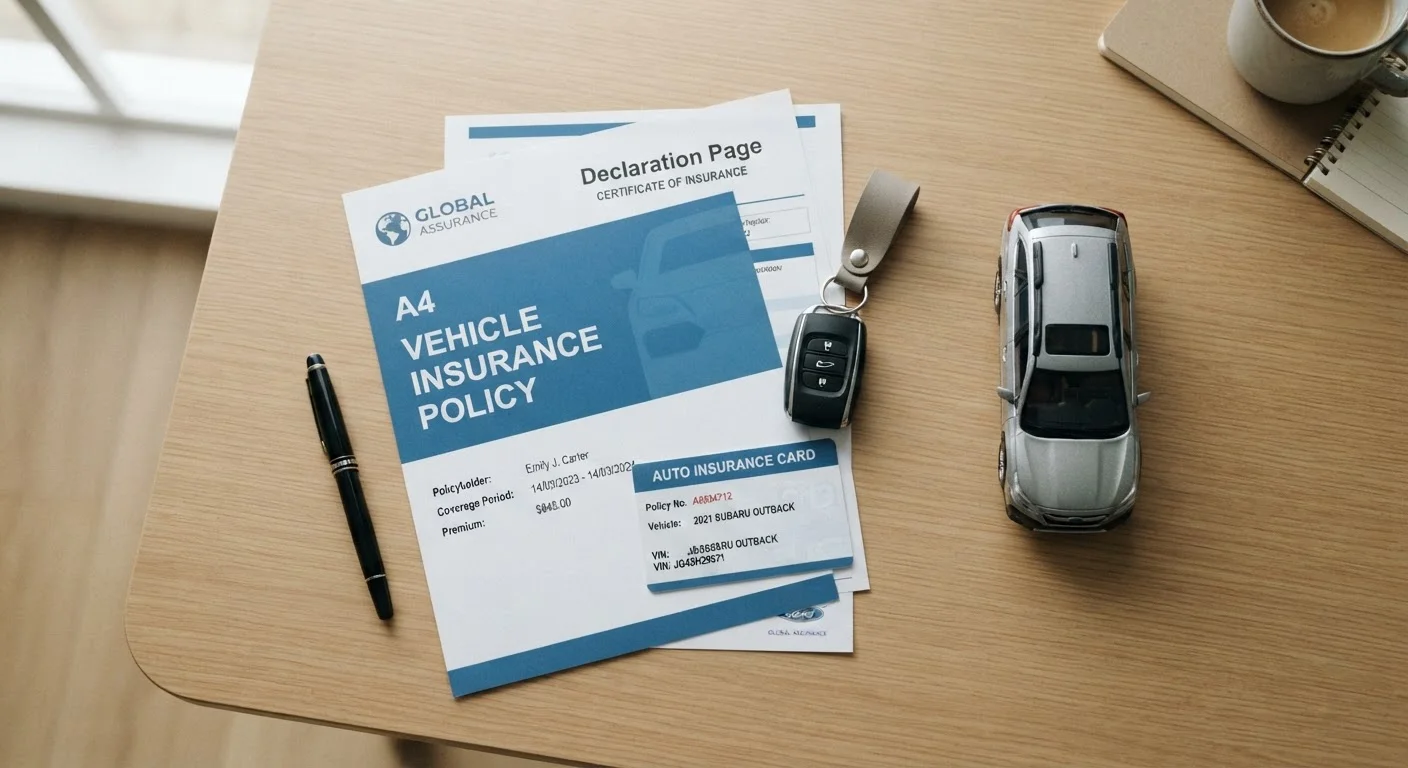
Your liability policy declarations page lists your limits in a format like 25/50/25 - meaning $25,000 bodily injury per person, $50,000 per accident, and $25,000 property damage. Review these numbers and compare them to your assets and income. If your limits are lower than what you could realistically lose in a lawsuit, consider discussing higher limits or an umbrella policy with a licensed insurance agent.
Collision Coverage: When Your Car Takes the Hit
Collision coverage pays to repair or replace your vehicle after an accident with another car or a stationary object - a guardrail, a telephone pole, or even a pothole in some policies. Importantly, fault generally doesn't determine whether collision pays out; if your vehicle is damaged in an accident, collision covers it (minus your deductible).
Collision is optional under state law, but lenders and leasing companies almost always require it when you're financing or leasing a vehicle. Once a car is paid off and its value has depreciated significantly, some owners choose to drop collision and self-insure against that risk.
~1 in 8
U.S. drivers are uninsured
According to the Insurance Research Council, an estimated one in eight drivers nationally lacks auto insurance, though rates vary considerably by state.
49 states + DC
Jurisdictions requiring liability insurance
Nearly every U.S. state mandates that drivers carry at least a minimum level of liability coverage to legally operate a vehicle.
~30%
Of collision claims involve single-vehicle accidents
Industry data consistently shows that a significant share of collision claims involve the insured driver hitting a stationary object, not another vehicle.
Comprehensive Coverage: Beyond the Road
Comprehensive coverage - sometimes called "other than collision" - protects your vehicle from a wide range of non-accident events:
- Theft or vandalism
- Weather damage (hail, flooding, wind)
- Fire
- Falling objects (tree limbs, debris)
- Animal collisions (a deer strike, for example)
Like collision, comprehensive carries a deductible. It also pays out based on your vehicle's actual cash value (ACV) - what the car is worth at the time of loss, not what you paid for it or what it would cost to buy new. Understanding ACV is important: if your car is older and has depreciated substantially, a comprehensive payout after a total loss may be lower than you expect.
Just as with other insurance types, it's worth comparing how comprehensive coverage works versus, say, how travel insurance operates - in both cases, the specific policy language determines what's actually covered.
Uninsured and Underinsured Motorist Coverage
Despite legal requirements, a significant share of U.S. drivers are on the road without adequate insurance. Uninsured motorist (UM) and underinsured motorist (UIM) coverage protects you in those scenarios.
- Uninsured motorist: Covers your injuries (and sometimes vehicle damage) when the at-fault driver carries no insurance at all.
- Underinsured motorist: Fills the gap when the at-fault driver has insurance, but their limits aren't high enough to cover all your losses.
Some states require UM/UIM coverage; others make it optional. It's a coverage type that's easy to overlook but can matter enormously after a serious accident. The Insurance Research Council has consistently found that roughly one in eight drivers is uninsured nationally, though rates vary significantly by state.
If you're evaluating your full financial protection picture, the same systematic approach to understanding what's covered - and what isn't - applies whether you're reading an auto policy, a renter's insurance policy, or any other contract.
No-Fault States Have Different Rules
In no-fault states - including Florida, Michigan, New York, and several others - each driver's own insurance pays for their medical expenses after an accident, regardless of who caused it. These states typically require Personal Injury Protection (PIP) coverage. The rules for suing the at-fault driver are also more restricted. If you live in or drive through no-fault states, verify how those rules interact with your existing policy.
Other Common Coverage Add-Ons
Beyond the four core types, most insurers offer optional coverages worth understanding:
- Personal Injury Protection (PIP) / Medical Payments (MedPay)
- Pays for medical expenses for you and your passengers after an accident, regardless of fault. PIP is mandatory in some no-fault states and broader in scope than MedPay.
- Gap Insurance
- If your car is totaled and you owe more on your loan than the car's ACV, gap insurance covers the difference. Particularly relevant for drivers who made small down payments or have long loan terms.
- Rental Reimbursement
- Pays for a rental car while your vehicle is being repaired after a covered claim.
- Roadside Assistance
- Covers towing, jump-starts, flat tires, and lockout services. Some drivers already have this through a separate membership program, so check before adding it to your policy.
When evaluating what coverage makes sense for your situation, consider your vehicle's age and value, your financial cushion, and your state's requirements. For broader context on financial protection products, the Buying a Car hub covers related considerations when you're in the market for a vehicle.
This article is for general informational purposes only and does not constitute insurance, legal, or financial advice. Coverage requirements, availability, and terms vary by state and insurer. Consult a licensed insurance professional for guidance tailored to your specific situation.
Frequently Asked Questions
Collision coverage pays for damage to your vehicle resulting from an accident with another car or object. Comprehensive coverage pays for losses caused by events outside your control - such as theft, hail, flooding, or a deer strike. Both typically carry a deductible you pay before the insurer covers the rest.
Liability insurance meets legal minimums in most states, but it only covers damage and injuries you cause to others. It does not pay for your own vehicle repairs or your own medical costs. Drivers who rely solely on liability coverage assume those out-of-pocket risks themselves.
Uninsured motorist (UM) coverage steps in when a driver who hits you carries no insurance or insufficient insurance to cover your losses. It can pay for your medical bills, lost wages, and sometimes vehicle damage depending on your policy and state rules.
Many comprehensive and collision policies extend some coverage to rental vehicles, but the specifics vary widely by insurer and policy. Always review your policy declarations page and contact your insurer directly before assuming a rental is covered.
A deductible is the amount you agree to pay out of pocket before your insurer pays the rest of a covered claim. Higher deductibles generally lower your premium, while lower deductibles mean your insurer covers more of a claim but your premium is typically higher.
Yes. States mandate minimum liability coverage, and some require uninsured motorist or personal injury protection coverage as well. If you finance or lease your vehicle, your lender will typically require collision and comprehensive coverage in addition to state minimums.
The content on this site is for informational purposes only and is not a substitute for professional advice. Always consult a qualified professional for guidance specific to your situation.